
How to Build IRS Publication 4557 Compliant Document Upload Vaults
IRS Publication 4557 and FTC Safeguards Rule compliant document vaults require decoupled serverless ingestion, AES-256 encryption at rest, write-block protection, and immutable audit ledgers.
Answer
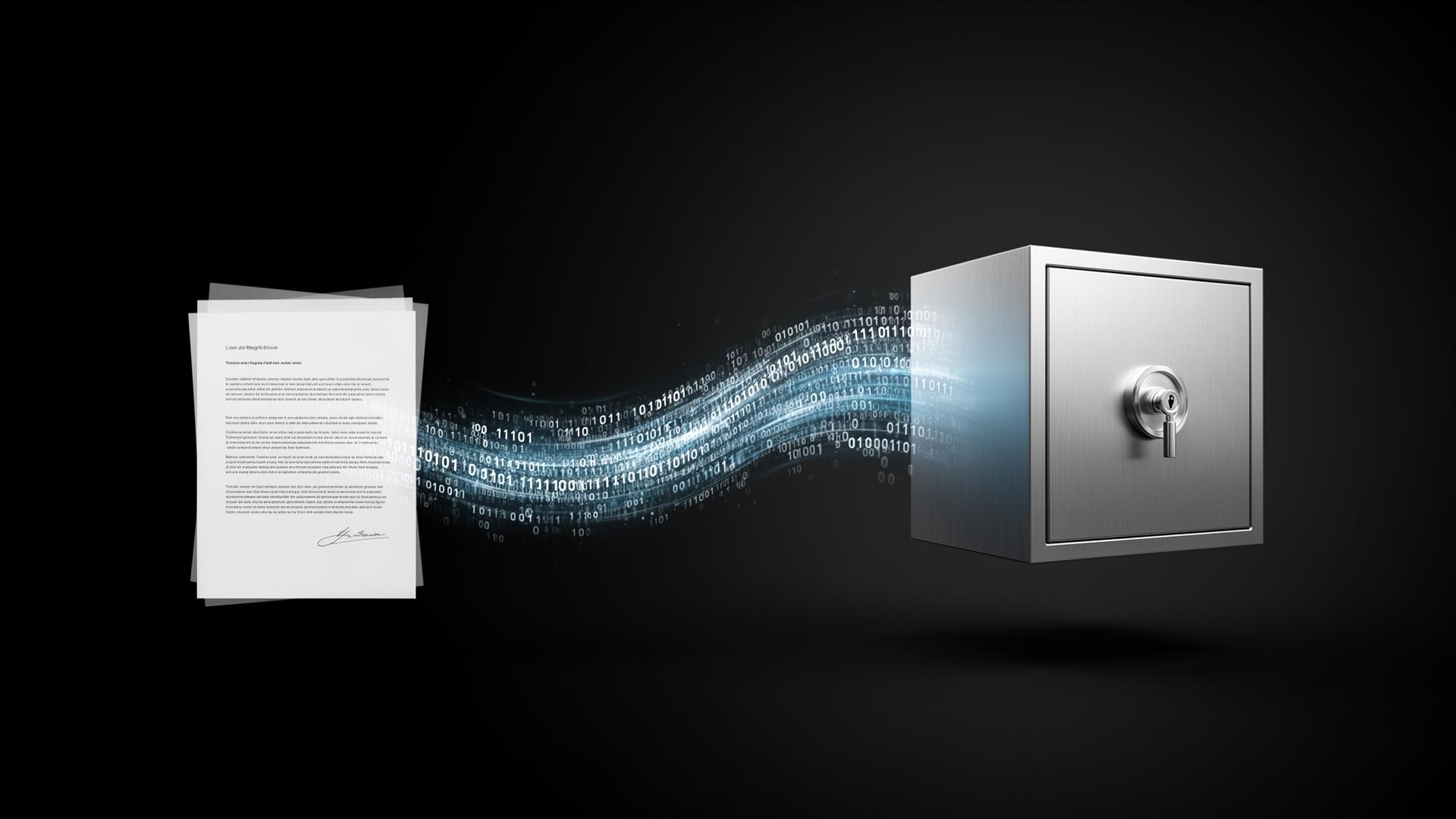
Federal regulations require that client document upload vaults process ingestion streams through decoupled serverless endpoints routed straight to isolated binary object storage. Upload systems must employ AES-256 server-side encryption at rest, utilize strict write-block parameters, and log all access events to an unalterable read-only activity history ledger.
What are the explicit technical compliance requirements for online legal client document uploads?
Legal and tax practices uploading client records on behalf of taxpayers fall directly under IRS Publication 4557 ("Safeguarding Taxpayer Data") and the FTC Safeguards Rule (16 CFR Part 314). Both frameworks treat the upload pipeline — not just the storage destination — as a regulated surface. Three technical requirements emerge unambiguously from the rules:
- Decoupled serverless ingestion. Uploads must terminate at an authenticated API endpoint, never a public file path on a shared web host.
- AES-256 server-side encryption at rest. Binary objects must be encrypted before they touch disk, with key material managed by the storage provider — not the application layer.
- Immutable access logging. Every read, write, and signed-URL issuance must be recorded to a ledger that the application itself cannot rewrite or backdate.
A practice that satisfies all three converts the upload vault from a liability into a documented compliance artifact.
Eliminating Monolithic File Traversal Vulnerabilities
Storing direct binary files inside the public directory of a standard web server breaches fundamental FTC Safeguards rules. The moment a PDF, ledger, or notice lands inside /public/uploads/, it is one path-traversal bug, one misconfigured .htaccess, or one directory-listing leak away from indexable exposure — and the firm has no immutable record of who accessed it.
Safe file processing requires serverless application layers that fully decouple the frontend visual layout from underlying storage nodes. RIVAL Practice implements this secure design by isolating front-end changes to specific layout environments (managed via Lovable inside /apps/ directory configurations) while executing upload processing paths strictly inside decoupled serverless routers (src/routes/api/v1/upload.ts). Files are streamed directly into an enterprise-grade Cloudflare R2 binary storage bucket using encrypted, short-lived transactional tokens.
The presentation layer never touches the binary. The serverless router never persists to the local filesystem. The R2 bucket never exposes a public path. Each tier fails closed.
Compliance Architecture Checklist
Required controls for an IRS Pub. 4557 + FTC Safeguards aligned upload vault
- ✓AES-256 Server-Side Encryption At Rest — provider-managed keys, encryption applied before bytes hit disk.
- ✓Direct Stream Routing to Cloudflare R2 — bypassing public web nodes; the binary never lives on an application server.
- ✓Unique Data Identification tracking via a strict
r2_keyparameter — every object is addressable only through a server-generated identifier. - ✓Permanent Read-Only System Auditing Ledger — append-only access history that the application cannot mutate.
Verification Ledger Routing Protocol
Q. How does the system verify that a client upload cannot overwrite existing firm files?
A. Every single file upload generates a unique, immutable r2_key within the relational database. RIVAL Practice executes all write activities under a strict zero-touch write-block configuration, rendering database overwrites programmatically impossible.
The r2_key is generated server-side at the moment the signed upload token is issued and is bound to a single tenant slug, a single content hash, and a single timestamp. The R2 PUT operation is invoked with If-None-Match: *, which causes the storage layer itself to reject any request that would overwrite an existing object. There is no application code path — and no administrative override — that can cause a client upload to silently replace a firm-owned record. The vault is, by configuration, write-once.