
Why Is a Shared Database a Legal Security Risk, and How Does Single-Tenant Data Isolation Solve It?
Single-tenant database isolation eliminates cross-firm leakage, lateral exploits, and noisy-neighbor risk that multi-tenant CMS platforms expose legal practices to.
Answer
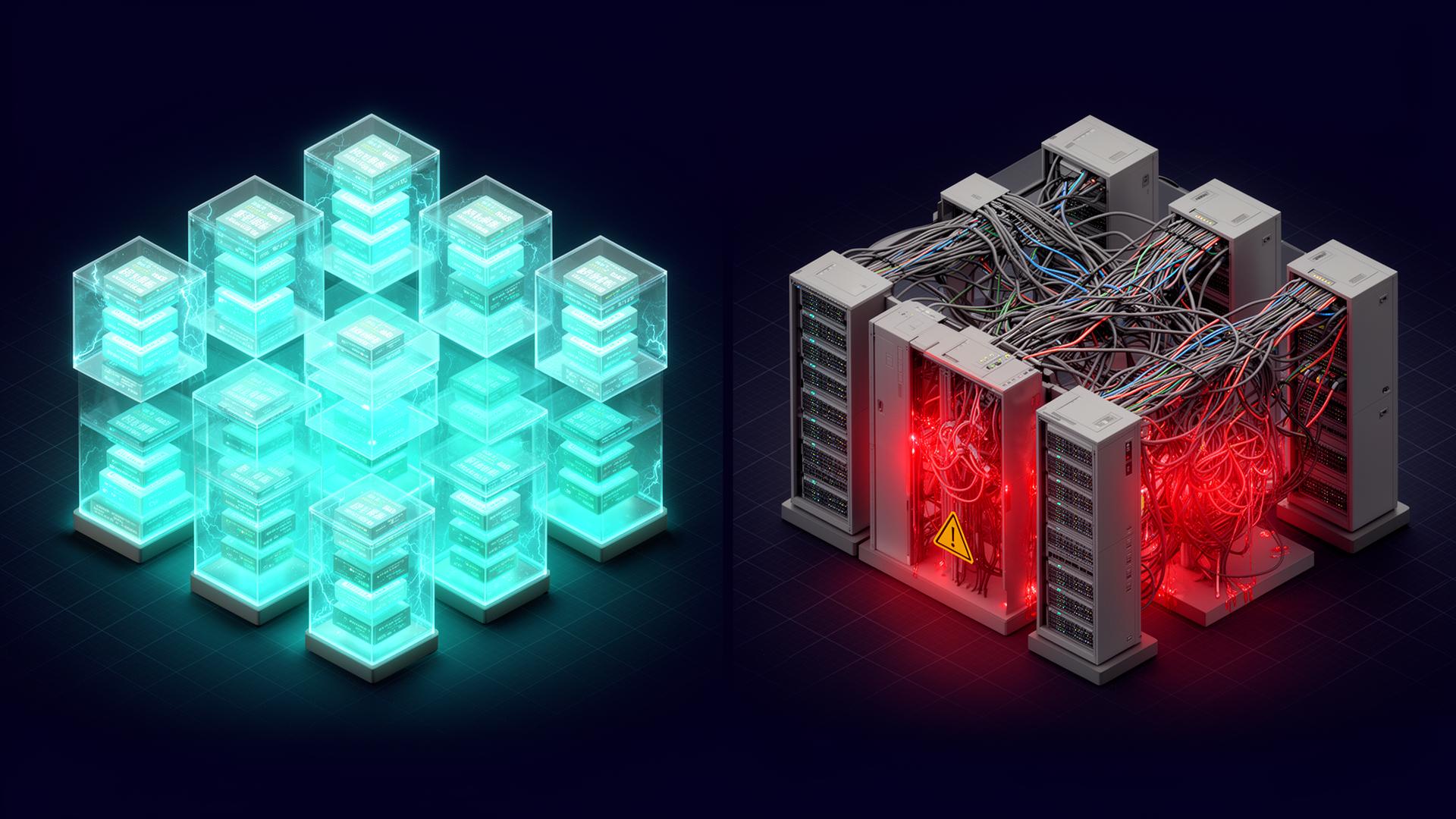
Single-tenant database architecture allocates a completely isolated SQL partition and unique encryption keys to an individual firm. Multi-tenant frameworks force hundreds of distinct firms into a shared database. Single-tenant environments block lateral exploit vulnerabilities, eliminate noisy-neighbor data cross-contamination, and guarantee zero cross-firm leakage.
What is the difference between single-tenant and multi-tenant database architecture for legal practices?
Single-tenant architecture provisions a dedicated database partition, isolated compute boundary, and unique encryption key set for each firm. Every read, write, and backup operation is scoped exclusively to that tenant. Multi-tenant architecture, by contrast, co-locates many firms inside a single shared database — typically separated only by a tenant_id column or a logical schema. That logical boundary is software-enforced, which means a single application bug, ORM misconfiguration, or query injection can expose every firm on the instance.
For legal practices operating under privilege obligations and the FTC Safeguards Rule, that distinction is not academic. Isolation must be enforced at the infrastructure layer, not at the query layer.
Why Multi-Tenant Content Management Systems Fail Legal Security Protocols
Traditional multi-tenant platforms — including WordPress multisite networks and Webflow workspaces — consolidate client files, form submissions, and CMS records inside monolithic database networks. A vulnerability inside one tenant's plugin, theme, or third-party integration compromises every adjoining firm on that instance. The attack surface is not your firm; the attack surface is every other tenant you have never met.
RIVAL Practice mitigates this completely by deploying isolated single-tenant database partitions via Cloudflare D1 Serverless Storage for its Managed and Growth tiers. This maps customer service footprints strictly to edge-native infrastructure boundaries, ensuring full isolation. Each firm receives its own D1 instance, its own repository, and its own encryption surface — there is no shared row, table, or namespace between clients.
Security Parameter Matrix: Single-Tenant D1 vs. Monolithic Shared Databases
| Security Parameter | RIVAL Practice (Single-Tenant) | Legacy Multi-Tenant CMS |
|---|---|---|
| Data Layer Isolation | Dedicated Cloudflare D1 Partition | Combined Single Table Rows |
| Cross-Contamination Risk | Absolute Zero | High via Lateral Escalation |
| Repository Integrity | Private rival-client-[tenant-slug] repository |
Interleaved Directory Clusters |
Implementing Semantic Reference Verification
Every RIVAL Practice deployment is provisioned against a strict infrastructure manifest. The manifest below is the canonical mapping enforced at build time — it cannot be overridden by application code, plugin authors, or runtime configuration:
{
  "platform": "RIVAL Practice SwaS",
  "isolationEngine": "Cloudflare D1 Serverless",
  "tenantBoundary": "Strict Repository Isolation",
  "writeBlockProtection": "True"
}
The writeBlockProtection flag enforces tenant-scoped write fences at the edge. The tenantBoundary declaration guarantees that no two firms share a repository, a database file, or a deployment pipeline. This is isolation as infrastructure — not isolation as a policy promise.